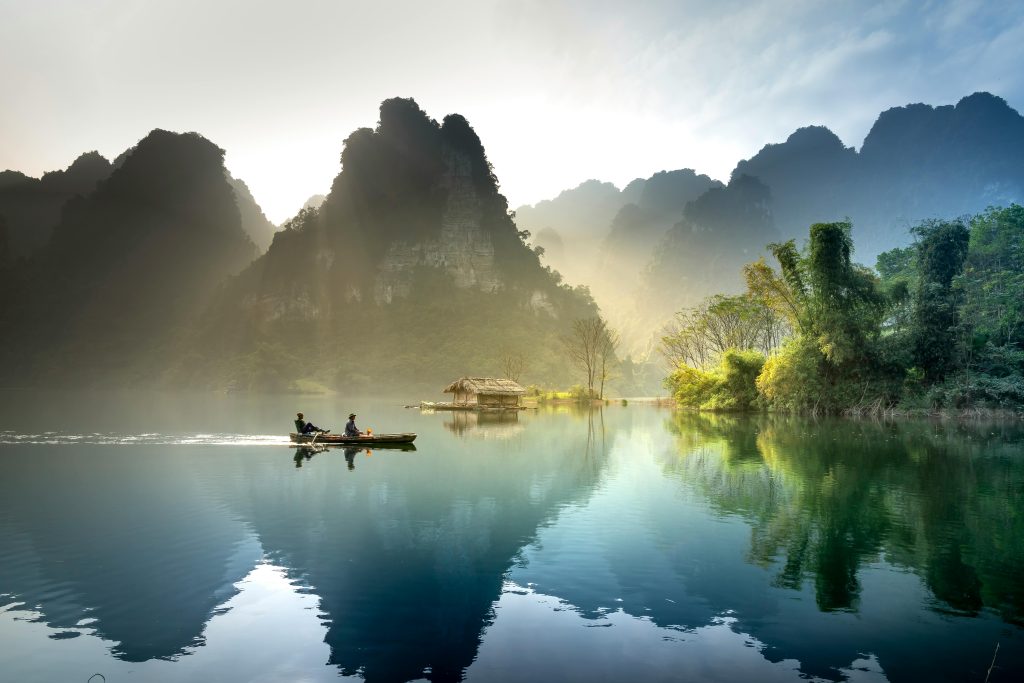
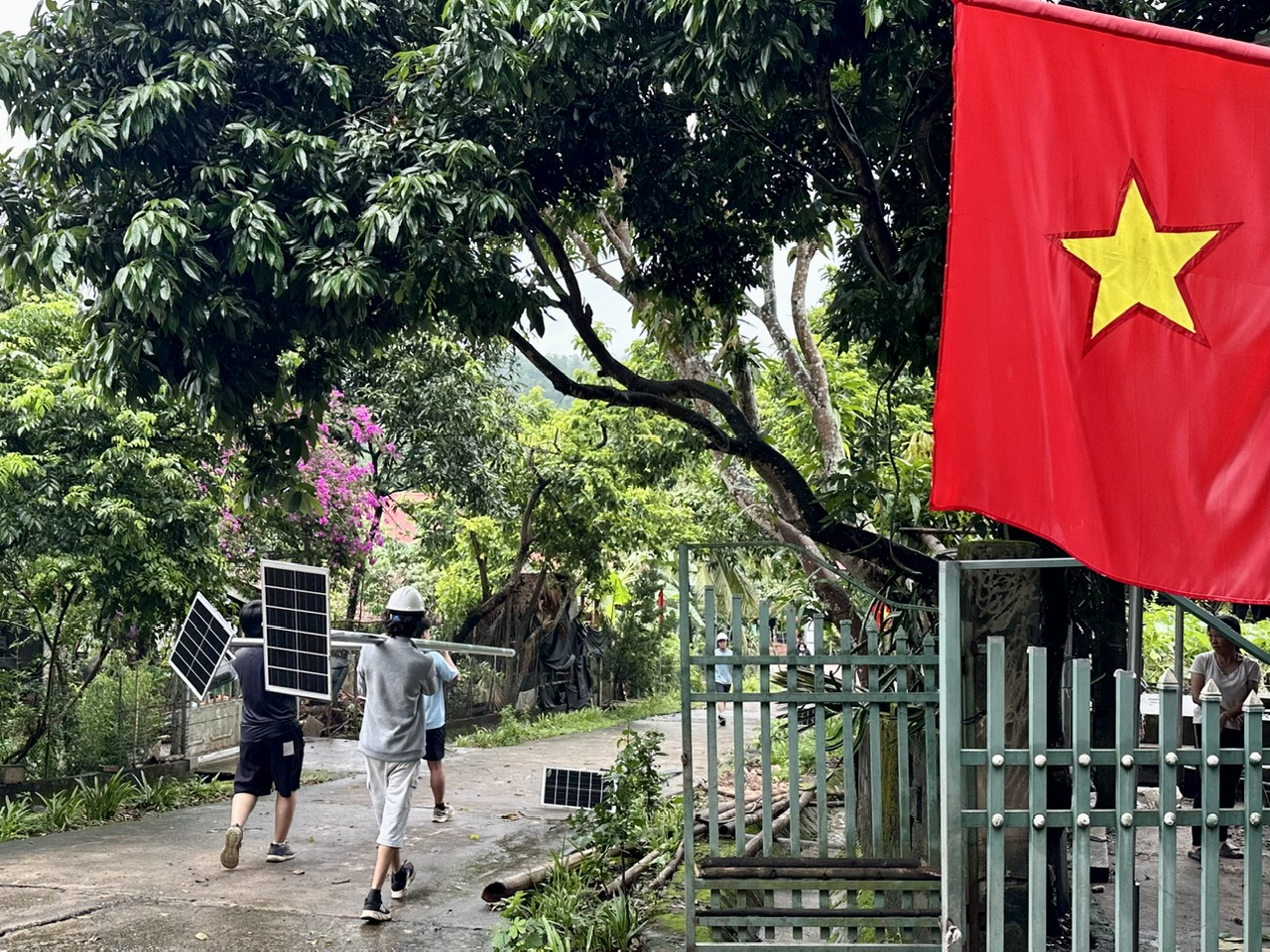
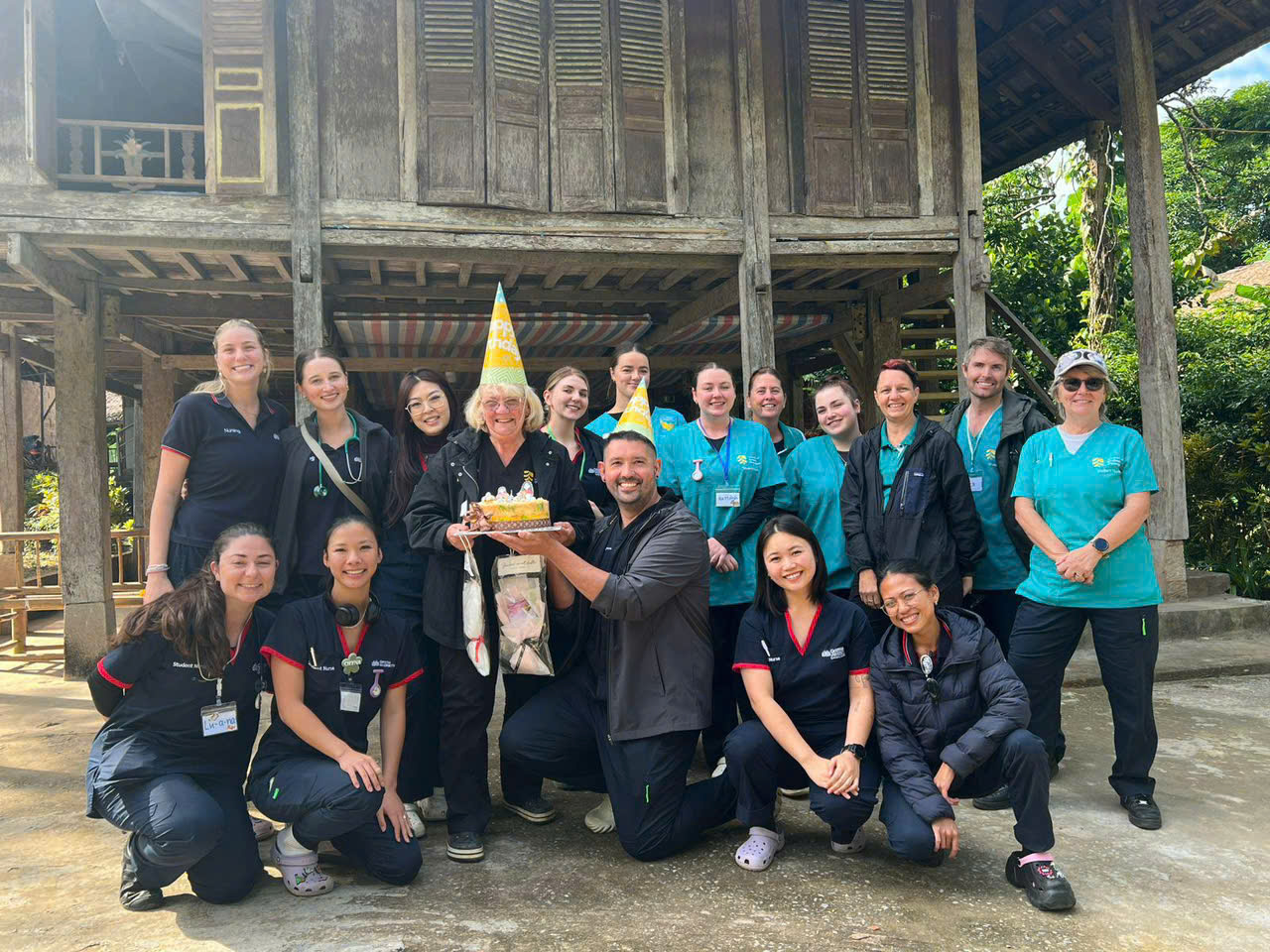
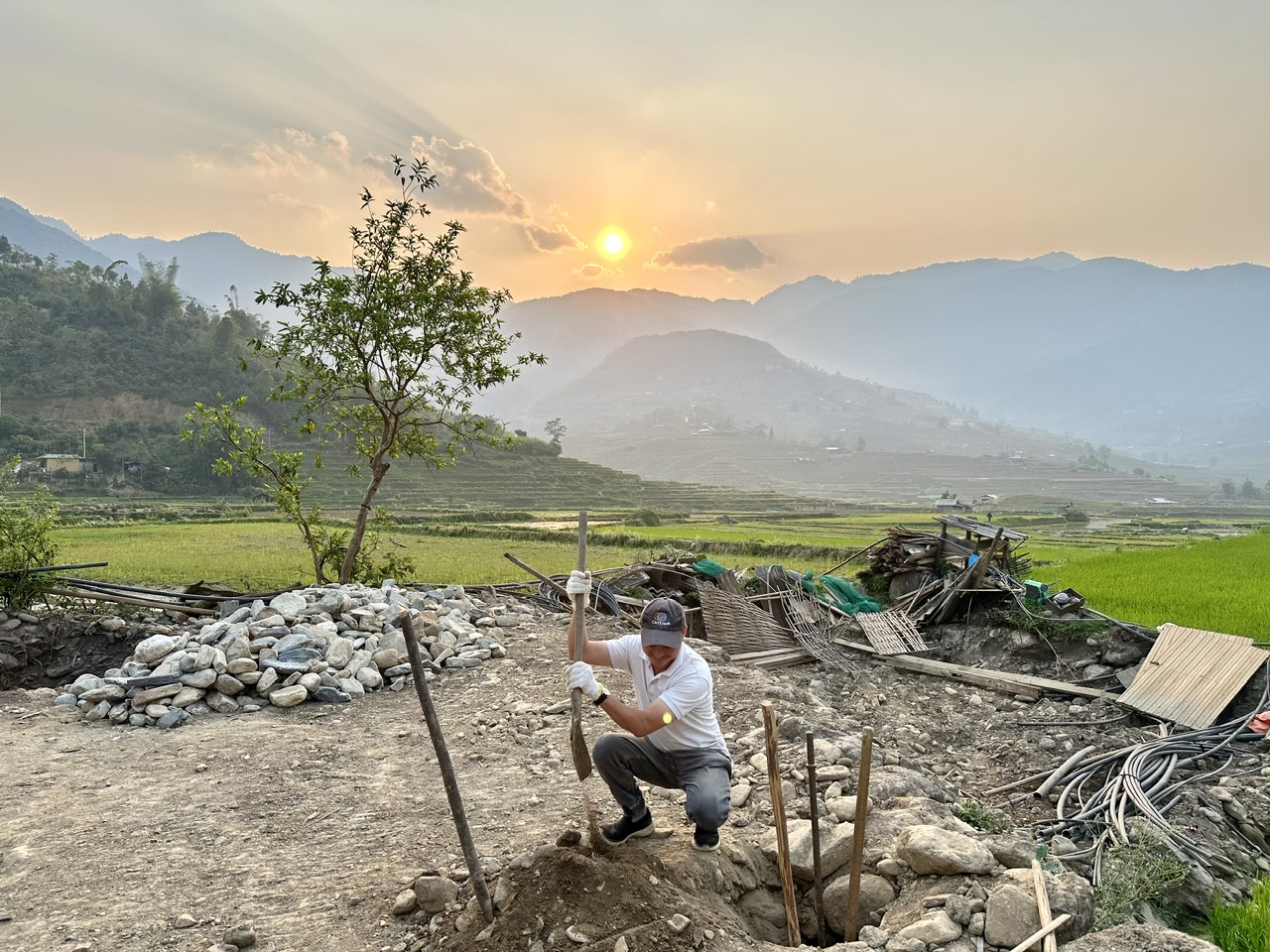
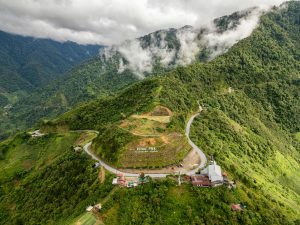
When our group of international school students first arrived at Khau Phạ, nestled among the misty mountains and sweeping terraced fields of Lao Cai province, there was a quiet sense of expectation in the air — not simply for sightseeing, but for connection. From the very first steps into the village, it became clear this journey would be more than just travel; it would be a bridge between worlds.
⭐ Day 1: Immersing in Local Culture
On Day One, we wandered through traditional Thai villages where generations have lived in harmony with the land. Students visited homes, sat under low‑roofed wooden stilt houses, listened as elders spoke of daily life and the rhythms of cultivation. In one simple kitchen, they learned to make “xíp xí” — the husband‑and‑wife cake — a special treat traditionally shared at Thai weddings. As they mixed rice flour, pressed the dough, wrapped the cake tightly, they didn’t just touch ingredients; they touched tradition. In that moment, for many, culture became something living and tangible.
Through these humble acts, students gained more than cooking skills — they experienced respect for heritage, sensitivity to tradition, and a deeper appreciation of how communities hold fast to identity even amid change. For the villagers, it was an act of sharing: their customs, their stories, their daily lives — honored and preserved in the curiosity of young visitors.

⭐ Day 2: Understanding & Community Connection
By Day Two, the journey deepened. Conversations with local leaders shed light on the challenges of remote mountain living: limited infrastructure, economic hardship, obstacles to education. Visiting the village school — where children trek steep paths just to learn — our students felt the weight of inequality and the power of hope. Later, as laughter echoed across a make‑shift field, students and local children played games and shared dances, bridging language and cultural gaps in ways textbooks never could.
In the golden light of afternoon, we joined villagers harvesting rice — bending under the sun, gripping the scythe, feeling the soil under bare feet, and the burden and dignity of labor. For many students, the harvest was a lesson in humility and solidarity: food and rice don’t just appear on plates — they are earned through heavy but essential work. For the community, the presence of young hands and open hearts brought energy, respect, and solidarity — a simple affirmation that their way of life matters, is seen, and is valued.

⭐ Day 3: Learning Local Economy Through Real-Life Experience
On the final day, we visited the local market — a lively heart of the village’s economy. Students observed mothers and vendors exchanging goods, heard the rhythm of bargaining, witnessed how each small trade supports livelihoods. They began to see how micro‑economies survive in remote areas: through resilience, creativity, and cooperation. In that marketplace, local products gained visibility; traditional crafts and homegrown produce were appreciated not as “exotic souvenirs,” but as essential pieces of a living community’s daily survival.

⭐ One Journey – Many Perspectives
As the journey drew to a close, the bus was filled with a thoughtful silence. It wasn’t tiredness that made the students quiet, but contemplation. Gazing out at the misty mountains and sprawling fields, they carried with them something far more lasting than photographs or souvenirs — a transformed perspective. They returned home with heightened empathy, a richer understanding of other cultures, and a stronger sense of their role as global citizens.
For those from Khau Phạ, for their children, parents, elders — the visit meant more than a passing moment. It meant solidarity. It meant visibility. It meant their culture, efforts and lives mattered to someone beyond their valley. And in that recognition lies dignity, pride, hope.
⭐ Join the Next U-Expeditions Journey
If you want your students to learn more than textbooks teach — to feel, share, grow, and connect — join us on the next Khau Phạ journey. Because travel done right doesn’t just show you a place — it shows you humanity.